



Previous Story
Psoriasis – What is it?
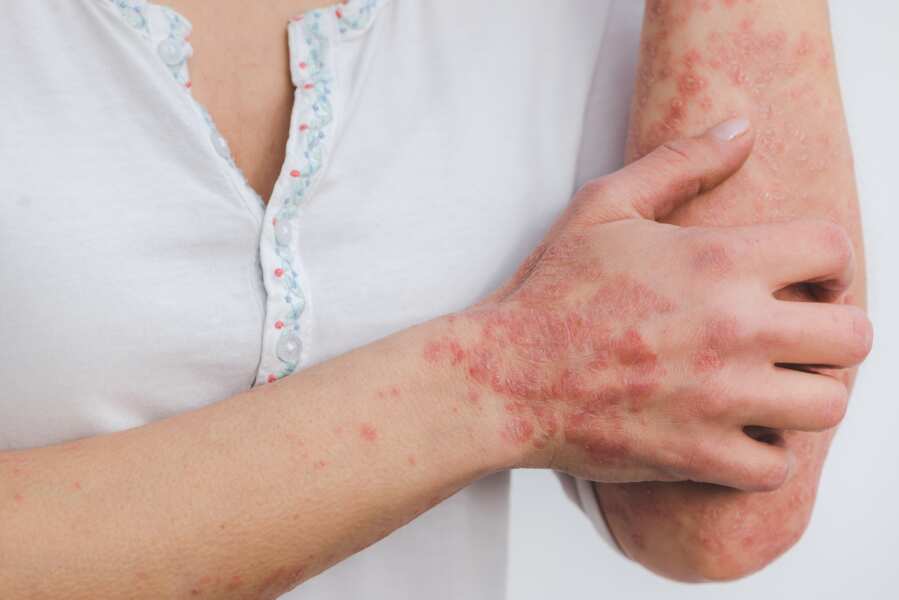
Psoriasis – What is it?
Jane Jackson, RN, CRC BHealthyRN 4.27.2026
Psoriasis, a chronic skin condition affecting over 7 million Americans with nearly 150,000 new cases diagnosed each year. Amazingly, in March 2026 – according to Wordstream – there were 823,000 searches for “PSORIASIS” in the US alone. So what is it?
A rapid growth of cells on the skin’s outer layer – the epidermis. Normal skin cells mature and pass from the bottom layer of the skin to the epidermis in about 28 days. Psoriatic cells form in about 8 days resulting in an excessive number of skin cells clustered in an area. These appear most often on the arms, knees, legs, elbows, scalp, ears, and back. The patches – sometimes called plaque – can be red to brown in color and are often covered with a silvery white scale. Severity can range from a minimal cosmetic problem to total body surface involvement. Hereditary factors account for nearly 1/3 of all affected patients.
Just under 75% of those affected by psoriasis develop it before turning 40 years of age. Psoriasis generally follows a pattern of periodic flare-ups alternating with periods of remission. Attacks can be triggered by nervous tension, stress, illness, injury, surgery, viral or bacterial infections, sunburn, cold weather, overuse of drugs or alcohol, smoking, the use of non-steroidal, anti-inflammatory drugs, lithium, chloroquine, and beta blockers (a type of medication frequently prescribed for heart disease and high blood pressure). Some unfortunate sufferers of psoriasis also experience an associated arthritis – psoriatic arthritis. This is like rheumatoid arthritis and just as difficult to treat. Estimates are that over 20% of people with psoriasis also developed psoriatic arthritis — characterized by joint inflammation and sometimes inflammation of the spine.
The underlying cause of psoriasis is not known but speculation is it may result from a faulty utilization of fat. Psoriasis is rare in countries where the diet is low in fat. Some research points to an immune system role in psoriasis. Nutritional supplements that are often discussed in relation to general skin health.
NOTE “This post contains affiliate links. If you click and make a purchase, I may earn a small commission at no extra cost to you.”
- Flaxseed and Primrose Oil – supply essential fatty acids
- Vitamin A, Lecithin – supports normal skin structure
- Vitamin D – vital for healthy skin
- Zinc – supports normal skin repair processes
- Shark Cartilage – marketed for general wellness
- Vitamin B – necessary for all cellular function
- Vitamin C – supports normal immune function
- Selenium, Glutathione –support general wellness
- Antioxidants
Herbs that may be beneficial are
- Burdock Root and Red Clover – for general wellness
- Dandelion and Yellow Dock – topical preparation for skin comfort
- Ginger – bath soaks
- Lavender – steam soothes irritated skin
- Sarsaparilla and Yellow Dock – used traditionally in herbal wellness practices
NOTE – Affiliate links in this article may generate a small commission that will be used to support this digital publication.
Quick Facts
- There is no known cure for psoriasis. Treatment is palliative and aimed at reducing the symptoms.
- Outbreaks of psoriasis seem to lessen during the summer months.
- Symptoms of psoriasis may go away but it will always be possible to have a recurrence.
- Some people report improvement with freezing of the lesion.
- Cortisone creams – which discourage skin cells from multiplying – are often prescribed. Long-term use can make skin thin and delicate.
- Methotrexate, a prescription medication, is effective for severe psoriasis. However, this drug can cause liver damage, especially with long-term use.
- Activated Vitamin D3 – available by prescription – has produced good results for many people with mild to moderate psoriasis.
- Ultraviolet light has been effectively used in combination with Methotrexate – which makes the skin more sensitive to UVL therapy. The combination helps improve severe or disabling psoriasis.
- The FDA has approved several prescription biological therapies in recent years. Many with good success. Some claim up to 84% success – but do not state what is considered success.
- Some people report improvement with saltwater immersion.
Note: Articles on BHealthyRN.com are to inform about medical conditions, non-prescription dietary supplements, and other health related topics. There is no guarantee of positive outcomes. Always consult your healthcare provider.
Jane Jackson, RN, CRC – 30+ year healthcare professional with experience in the hospital setting, outpatient setting, pharmacy data validation audits, and medical risk adjustment coding. Living peacefully with my best friend/husband on the Texas Gulf Coast – enjoying writing, crocheting, and fishing.